Before we start, as with many of my articles, I need to remind you that what follows is simply my opinion, based on many years of training and racing. I am certainly not a qualified medical practitioner, so please do your own research and seek appropriate professional advice where necessary. By all means, experiment with products that are legal and safe for you to use, but I suspect my general views on this subject will become fairly clear by the time you finish reading.
Let me start by saying that I’m not a great fan of supplements, vitamins, performance-enhancing products or any of that stuff. Why? Simple. They cost money, and they can distract us from the job at hand: good old-fashioned hard work.
That being said, I’m also a fan of these products. Confused? Well, over the years I’ve tried all sorts of things in the hope of finding that little bit extra, only to discover, more often than not, that as an amateur athlete I might be disappearing down a rather expensive rabbit hole. It’s amazing how quickly we can convince ourselves that the next product is going to be the one that makes all the difference.
It’s probably worth pointing out that I’m not particularly interested in getting into arguments about what the science says, or reading another glowing article written by someone who happens to sell the product being promoted. You can generally find an opposing opinion if you look hard enough, and before long you’re left wondering who or what to believe. For me, personal experience and how a product actually makes me feel have always carried considerable weight. Of course, that brings us to the wonderful subject of the placebo effect, which I’ll come back to shortly.

A few products I’ve tried along the way
The idea for this article came from my recent experiment with bicarbonate of soda, but before we get to that, let’s look at a few of the other products I’ve tried over the years.
If I feel a cold coming on, the first thing I tend to reach for is vitamin C. I’m certainly not alone in that, although I generally only bother when I’m training for an event. Otherwise, I’ll let nature take its course and save myself the money. Does it make any difference? Honestly, I don’t think I’ve noticed much, if any, benefit. Yet I’ll probably continue taking it when I feel a cold coming on during a heavy training block, partly because it doesn’t cost a fortune and partly because, well, you never know. Perhaps that’s the placebo effect already at work!
Some years ago, I also tried a product called Modex. Now, there’s an interesting one, because I felt fantastic while using it. As a bonus, it also seemed to settle my IBS issues, which was a rather welcome side effect. I’ll spare you the details, but those who suffer from similar problems will understand why that got my attention!
There were two main drawbacks. The first, and probably the biggest, was the cost. It wasn’t cheap. The second was having to remember to take it religiously every morning, which is another challenge altogether. Would I use it again? Absolutely, if I could get it sponsored and didn’t have to fork out the money myself!
Then there’s magnesium. I suspect plenty of us have tried it at some point, and many swear by it. I found a particular powdered product that seemed to work well for me. After a hard race or a tough training session, I’d take a dose that evening and often feel pretty good the following day, at least as far as muscle soreness was concerned.
Of course, there’s a catch. The different products can be expensive, and not every preparation agrees with everyone. In my case, some of the cheaper supermarket tablets came with a rather unwelcome side effect, often arriving at around three o’clock in the morning. I have a perfectly good prune-dosing technique if that’s the result I’m after, thanks very much! The powdered product also tasted absolutely disgusting, and eventually that became another reason to give it a miss. So, for the moment, I’ll put up with a bit of muscle soreness rather than subject myself to that experience again.
And then we have beetroot. I gave that one a go about twenty years ago, having heard all about its potential benefits for athletic performance. The following day, I had a rather alarming experience in the toilet and became convinced that something had gone horribly wrong. That little episode eventually resulted in a camera being inserted where no camera should ever have to go. The good news was that everything was fine. The bad news? It was the beetroot!
So, as you can see, my history with supplements has been a mixed bag. Some seemed to work, others didn’t, and a few left me wondering why on earth I’d bothered in the first place.
Bicarbonate of soda: the miracle I thought I’d found
This brings me to my latest experiment, bicarbonate of soda.
I’d heard about its use as a performance aid, particularly in high-intensity exercise, and thought it might be worth investigating ahead of this year’s Triathlon World Championships. There was also an interesting historical connection that caught my attention. Percy Cerutty, the famous Australian athletics coach, had his athletes training in sand dunes, drawing on methods associated with the training of racehorses. The soft sand provided a demanding workout, helping to develop strength in the lower legs and place particular demands on the Achilles tendons. It got me thinking about how ideas and practices can cross over between different sports. Bicarbonate of soda has also been used in racehorses for some time, and knowing that gave me another reason to be interested in trying it myself. If it’s been part of the conversation in horse racing for years, I thought it was certainly worth exploring what it might do for me as an athlete.
I decided to give bicarbonate of soda a go. I understood that there could be some unpleasant physical side effects, but I thought that, with a sensible approach and some testing well before race day, it might be worth a try.
My first trial involved a relatively small dose of seven grams, which I considered a cautious starting point for someone of my size. I started with a spin-bike session, and, well, I’ll be damned! The difference seemed remarkable. My power output was noticeably higher, and the whole session felt easier. I thought I might have stumbled across a miracle.
Next came a swim session. Again, I thought I could see a difference, with my 100-metre splits improving by between three and six seconds. At this point, I was becoming rather excited. Had I finally found something that would give me that little extra edge?
There was, however, a small problem. My stomach wasn’t entirely happy. I say small, but that’s a relative term when you already have a history of stomach issues. What might be a minor inconvenience for someone else can be a rather different proposition for me.
The big question was whether I could run comfortably with my stomach feeling like that. The last thing I wanted was to discover halfway through a race that my gut had other plans. We’ve all seen how quickly gastrointestinal issues can ruin an otherwise good performance, and I certainly didn’t want to risk that at a major event.
So, after further testing on the bike and in the pool, it was time to try running.
My first run went well. Very well, in fact, even with a slightly unsettled stomach. I was encouraged and thought I might be onto something after all. Unfortunately, that was where the story began to change. On subsequent attempts, the benefits I’d thought I was experiencing disappeared. My stomach felt worse, I felt sluggish, and my second run was noticeably slower.
That was enough for me. Bicarbonate of soda will not be making its way into my race-day routine.
What did I actually learn?
Here’s the interesting part, and perhaps the most important lesson of this whole exercise.
Something rather obvious finally dawned on me. In fact, it was so obvious that I’m still wondering how I managed to miss it in the first place.
In the lead-up to a major race, I follow a fairly strict training program. I plan months ahead, work through the sessions, build my fitness and try to get myself into the best possible shape for race day. Every session has a purpose, and the improvements come from putting in the work over time.
Yet here I was, after months of consistent training, attributing some impressive performances to a dose of bicarbonate of soda.
Think about that for a moment. I’d spent months working hard to improve my fitness, and when I started producing better numbers and faster times, I was ready to credit a product I had only just introduced into my routine. Of course my power output and swimming times were improving. That was precisely what all those months of training were supposed to achieve!
I’m not saying bicarbonate of soda can’t help some athletes. It may well have a legitimate role in certain types of high-intensity exercise, and individual responses will differ. But in my case, how much of the improvement was actually due to the product, how much was the result of my training, and how much was simply expectation? I honestly don’t know.
And that’s the problem. When we introduce a new product at the same time as we’re getting fitter, it becomes very easy to confuse the two. We want to believe we’ve found an advantage, particularly when we’ve invested money and effort into trying it. Suddenly, every good session becomes evidence that the product works, while the bad sessions are conveniently explained away.
Perhaps I was so keen to find that extra edge that I wasn’t looking closely enough at what was actually happening.
My favourite supplement: the placebo effect
Which brings me to my favourite supplement of all: the placebo effect.
We know that our expectations can influence how we feel and perform. If we believe something is going to help us, that belief can affect our confidence, our perception of effort and the way we approach a session. That doesn’t mean every perceived improvement is imaginary, nor does it mean every supplement is useless. It simply means that what we believe and what actually causes an improvement aren’t always the same thing.
I suspect some athletes are more susceptible to this than others. Give one person a new product and they’ll swear it’s transformed their performance. Give the same product to someone else and they won’t notice a thing. Human nature is a funny business, particularly when we’re all looking for that little extra advantage over the competition.
And let’s be honest, who doesn’t want to find something that makes training easier or helps us go faster? We spend hours training, we put ourselves through some pretty uncomfortable sessions, and we’re always looking for ways to improve. The idea that a simple product might give us an extra few per cent is certainly appealing.
But perhaps we sometimes spend too much time looking for that advantage in a tub, a tablet or a powder, when the real gains are coming from the training itself.
So, are supplements a waste of time and money?
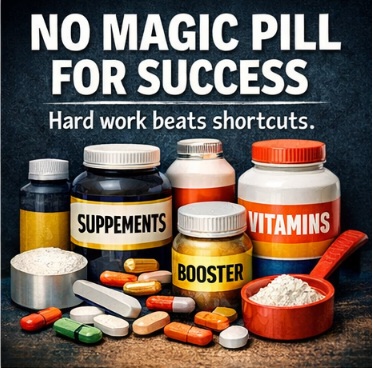
My main takeaway from all of this is fairly simple. Don’t let the search for a shortcut distract you from the things that really matter. Consistent training, sensible programming, adequate recovery and getting yourself to the start line healthy are all fundamental to performance. No supplement can replace those things.
That doesn’t mean everything sold as a supplement is a waste of money, and it certainly doesn’t mean that no legal performance-enhancing products work. Some products have good evidence behind them for particular purposes, and some athletes may benefit from using them. The trick is understanding what you’re taking, whether it’s appropriate for you, and whether the benefits are worth the cost and potential side effects.
For amateur athletes like me, there’s another question worth asking: even if a product works, is the improvement meaningful enough to justify the expense and inconvenience? If you’re spending a small fortune chasing marginal gains, perhaps that money would be better spent elsewhere.
And before anyone thinks I’ve suddenly become a model of restraint, let me make one final confession.
I’ll probably keep experimenting with these products. Yes, I know, that makes me a bit of a hypocrite! But I’m curious; I enjoy trying to improve, and if I can find something that genuinely helps without causing other problems, I’m happy to give it a go. If a product also gives me the confidence to believe I can perform better, then perhaps there’s something to be said for that too.
I’ll just try to remember that the product isn’t doing the months of training for me.
As always, these are my personal experiences and opinions, not medical advice. I’m not a medical expert, and what works for me may not work for you. If you’re considering supplements or performance-enhancing products, do your research and speak to a qualified health professional where appropriate. Make sure anything you use is safe for you, permitted under the rules of your sport, and tested well before race day.
Now, if you’ll excuse me, I’ve got some training to do. That, at least, I know I can’t buy in a tub!
Guy Besley is the author of Beyond the Call: The Art of Being a Rowing Coxswain. If you'd like to learn more, it's available as a two-volume edition on Amazon.


0 Comments