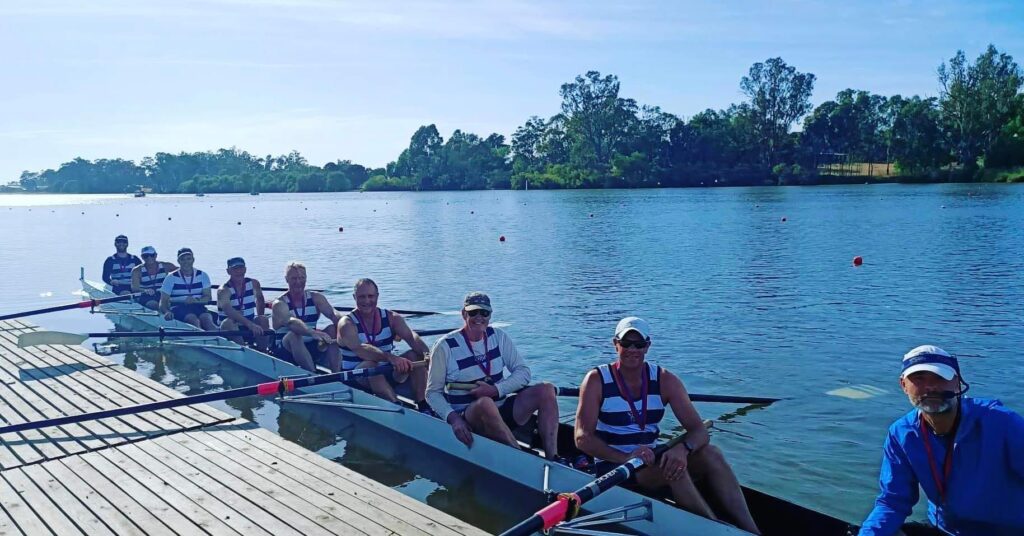
I was inspired to write this article following many conversations over the years in boat parks and around the rowing community, and more recently in particular, which prompted me to put pen to paper on what may be considered a sensitive topic.
In rowing, success is not a single definition, and that is one of the sport’s strengths. For some athletes, it is measured in medals and podium finishes. For others, it is far simpler: getting to the start line after a full training block, returning to racing after injury, or making the transition from sculling to sweep (or vice versa). For many, especially as age and experience accumulate, success becomes less about outcomes and more about continuity—staying fit, staying involved, and still being able to line up against other crews.
In practice, success is also shaped by role and involvement. In my case as a coxswain, I tend to place more value on results when there has been genuine contribution to the crew’s development over time. When there has been training input, preparation, and a shared progression toward a goal, a result feels earned in a broader sense than race day alone. Without that context, a result can still be a win, but it doesn’t always sit in the same category of meaningful success.
For many athletes, times are also used as a measure of performance, but rowing complicates that idea in a way few other sports do. Race times are heavily influenced by conditions that sit outside athlete control: wind, current, temperature, water temperature, lane allocation, water movement, and race dynamics (an often underappreciated factor). Because of this variability, rowing does not recognise official world records, instead using “world best times” as a more honest reflection of performance across conditions. It is an implicit acknowledgement that direct comparison between races is inherently limited, and that time alone is an imperfect measure of success.
Against that backdrop, the concept of “winning” becomes less straightforward than it first appears. In the current Victoria’s masters scene, fleet sizes are often small, with many races featuring only three or four entries, and sometimes fewer. On a three-lane course, that can mean a statistical one-in-three (or even one-in-two) chance of a medal simply by completing the race. At larger regattas, events are frequently split into divisions, which helps manage numbers and racing quality, but also increases the total number of medal opportunities across the day.
The recent 2026 Victorian Masters Rowing Championships illustrate this clearly. There were 369 athletes entered, yet 733 medals were awarded. Of those athletes, 266 left the regatta with at least one medal. None of this diminishes the effort required to compete—rowing remains physically and mentally demanding regardless of field size. Crews still train, prepare, and execute under pressure, and that reality should not be understated.
At last year’s Australian Masters Rowing Championships, there were 964 athletes, 2,132 medals awarded, and 593 athletes who won at least one medal.
Even at the 2026 Australian Rowing Championships, where competition depth is significantly higher, there were 2,077 athletes entered and 1,483 medals awarded, with 693 athletes collecting at least one medal. While this is a very different level of competition, it still highlights how frequently podium outcomes occur within structured regatta environments across the sport.
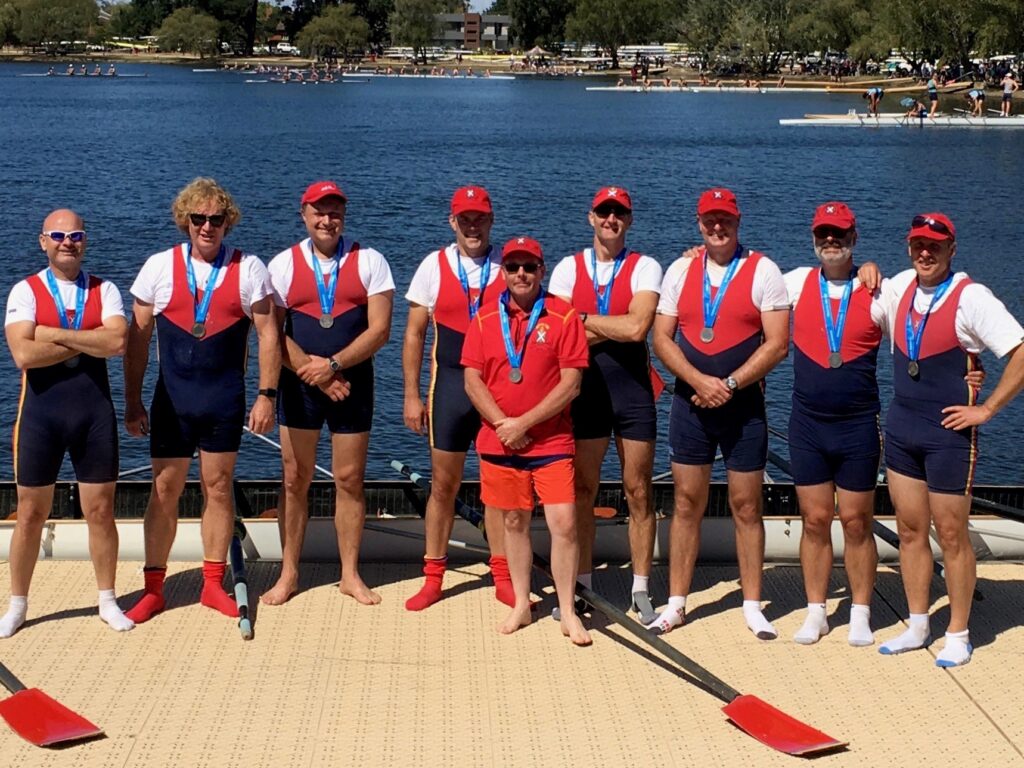
But it does raise an unavoidable question about what is actually being measured when we talk about success in this environment. When medal opportunities are frequent and fleet sizes are limited, winning inevitably becomes a softer indicator than it is in most other sports. It still matters, but its exclusivity—and therefore its weight—changes.
This is where the tension sits in masters rowing in particular. The sport still presents itself through the language of competition, yet the structure of that competition often produces outcomes where medals are more accessible than decisive. That does not invalidate them, but it does shift their meaning as a primary measure of achievement.
Perhaps the more accurate view is that rowing operates on two parallel definitions of success. One is competitive and results-based. The other is persistent and participation-based. Most athletes, whether they articulate it or not, end up navigating both.
Winning will always have its place. But in this context, it is only one part of a broader and more complex picture—one where simply continuing to turn up, train, and race may be the more telling indicator of success over time.
Guy Besley is the author of Beyond the Call: The Art of Being a Rowing Coxswain. If you'd like to learn more, it's available as a two-volume edition on Amazon.



0 Comments