I’ve always been an athlete that likes risk. Why? Because it’s fun — simple. Sport, in my view, should have an element of risk in it.
I remember a quote from Greg Welch, Ironman World Champion in 1994: “If you want to win, you’ve got to be willing to take risks.” That resonated with me big time. Conservatism doesn’t bring glory.
Anyone who has been in boats I’ve coxed will know I like taking risks. I don’t like the “vanilla” approach to race plans, and I like backing the abilities of the athletes I’m coxing. That said, I need to sign a bit of a disclaimer here — I don’t always know every crew perfectly, so sometimes judgement has to be adjusted on the fly.
Until recently, I didn’t realise there was actually a name for something that sits right in this space: the “Explore vs Exploit Dilemma”. I came across it in an article a few days ago and went down the rabbit hole.
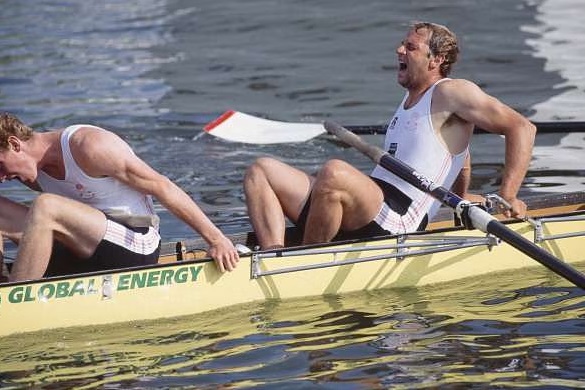
The idea is simple, even if it sounds academic. Exploring means trying something new to find a better way of doing things. Exploiting means sticking with what already works and getting the most out of it.
Every crew, whether they realise it or not, is constantly moving between these two modes — assuming the coaching team (and coxswain) are across planning properly. The challenge is that most crews don’t get the balance right. Not because they don’t understand rowing, but because training and racing pressure naturally pushes them toward one side.
In rowing, exploiting is where consistency lives. It’s locking in a race plan you trust, reinforcing technical patterns that already move the boat well, and repeating training sessions that you know deliver results — or worse, assume deliver results.
It’s also about making decisions that favour reliability over potential. When a crew is in a good place, this is where you want to spend most of your time. It’s also, generally speaking, the easier option physically and mentally.
The problem is that if you only ever exploit, you eventually plateau. You get very good at what you already are, but you stop discovering what you could be. Growth slows, and for older rowers especially, it can stop altogether. That’s where exploration has to come in.
Exploration is uncomfortable by nature. It might be a different boat setup, a change in rhythm or structure during training pieces, or moving athletes around in the boat to see what happens — which, of course, can bring ego into play very quickly.
In short, it’s deliberately testing different technical or training approaches. Most of the time it won’t feel better straight away. In fact, it often feels worse. That’s why crews abandon it too early and don’t give it enough time to see real outcomes.
But the point of exploration isn’t immediate performance. It’s information. You’re trying to find out whether something has a higher ceiling than what you’re currently doing.
Where crews tend to get this wrong is timing.
Early in a season, there should be a strong exploration phase. This is when you can afford to test, adjust, and get things wrong. But many crews settle into “status quo” early just to get the season underway, and because most seasons start with head racing, it’s easy to become conservative without noticing.
As you move closer to competition, the balance should steadily shift toward exploitation — making the most of what you’ve already discovered. By the time you’re racing, you should be almost entirely in “make it work” mode rather than “try something new” mode.
What often happens instead is the opposite. Crews stay too conservative for too long, then panic and start changing things late when there’s no time left to properly evaluate anything. That’s not exploration — that’s disruption.
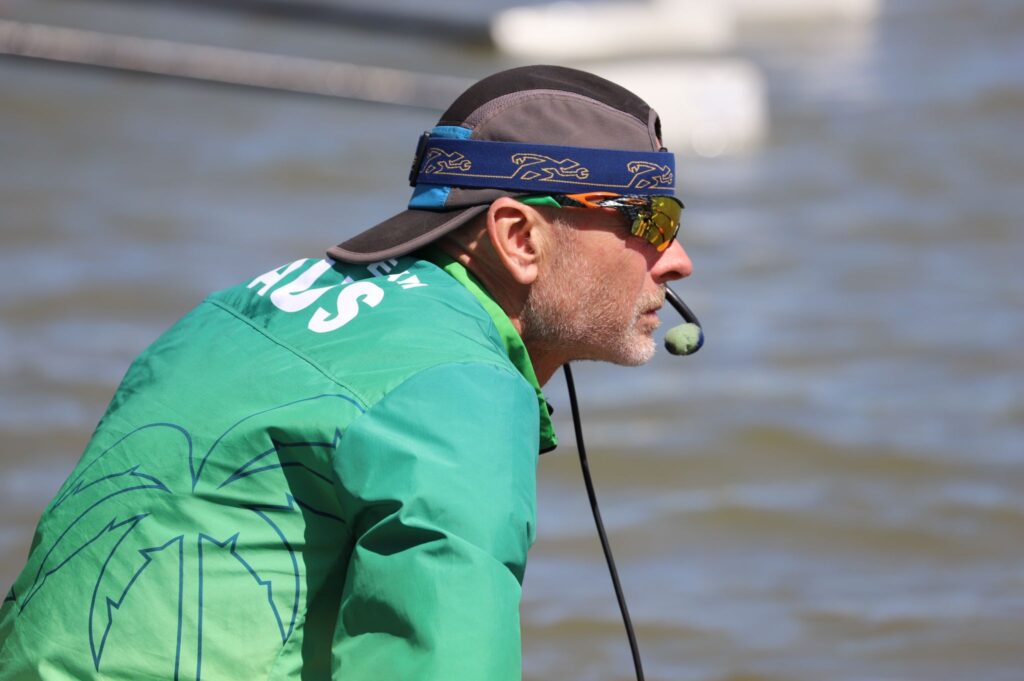
The same dilemma shows up in racing, especially for coxswains. Once you’re in a race, you’re constantly deciding whether to stick to the plan or respond to what’s unfolding around you.
Personally, I don’t love rigid plans. I prefer racing — working with the crew to respond in real time as the race develops. But even that still sits inside this framework: sticking to the plan is exploitation, reacting is exploration.
Good crews don’t randomly switch between the two. They operate with pre-agreed triggers so any deviation is controlled and intentional, not emotional.
Without that structure, races fall apart quickly. Crews chase moves too early, abandon rhythm too easily, or overreact to small shifts in speed. The better crews stay anchored, but flexible enough to respond when it actually matters — and that comes down to the coxswain having real race feel and being able to read the field.
There are a few common patterns that show up repeatedly. Some crews over-exploit mediocrity — they find something that is “good enough” and stop challenging it. Others over-explore, constantly tweaking without allowing anything to settle. Both limit performance, just in different ways.
The most effective programs are deliberate about this. They define what is fixed and what is open to change. They explore early and aggressively, then narrow focus as racing approaches. And importantly, they measure whether changes actually improve boat speed, not just whether they feel better.
At its core, this isn’t really a theory problem. It’s a discipline problem.
The best crews aren’t the ones who avoid change or chase it constantly. They’re the ones who know when to stop searching and when to start locking in.
And in rowing, that timing is often the difference between being competitive and being genuinely fast.
I challenge you to explore this concept.
Guy Besley is the author of Beyond the Call: The Art of Being a Rowing Coxswain. If you'd like to learn more, it's available as a two-volume edition on Amazon.


0 Comments