Before I get into this article, I probably need a couple of disclaimers.
I am not an AI expert, computer scientist or software engineer. I would describe myself as an AI hobbyist. I have been using AI for quite some time now, and I use it for all sorts of things in everyday life. Recipes are probably one of the most common. If I am cooking for a large group, I will use AI to help with quantities, shopping lists, and preparation schedules. If I am struggling with some piece of technology, I will ask AI to help me work it out. I have linked Apple Music and use AI to create playlists for all sorts of purposes – a 30-minute run, an erg session, a particular mood, or simply a particular genre of music.
So, for me, AI isn’t something that has suddenly appeared in the last few months. It has gradually become another tool that I use in everyday life, and I suspect that is probably the way many of us will eventually use it. We won’t necessarily think of ourselves as “using AI”; it will simply become another tool we turn to when we need some help.
Over time, though, I have become increasingly interested in what AI can do for training. That interest has gone well beyond simply asking it to write me a training program, and the more I have experimented with it, the more I have come to realise that the quality of what you get out of AI has an enormous amount to do with what you put into it.
I have been using AI for training for a while
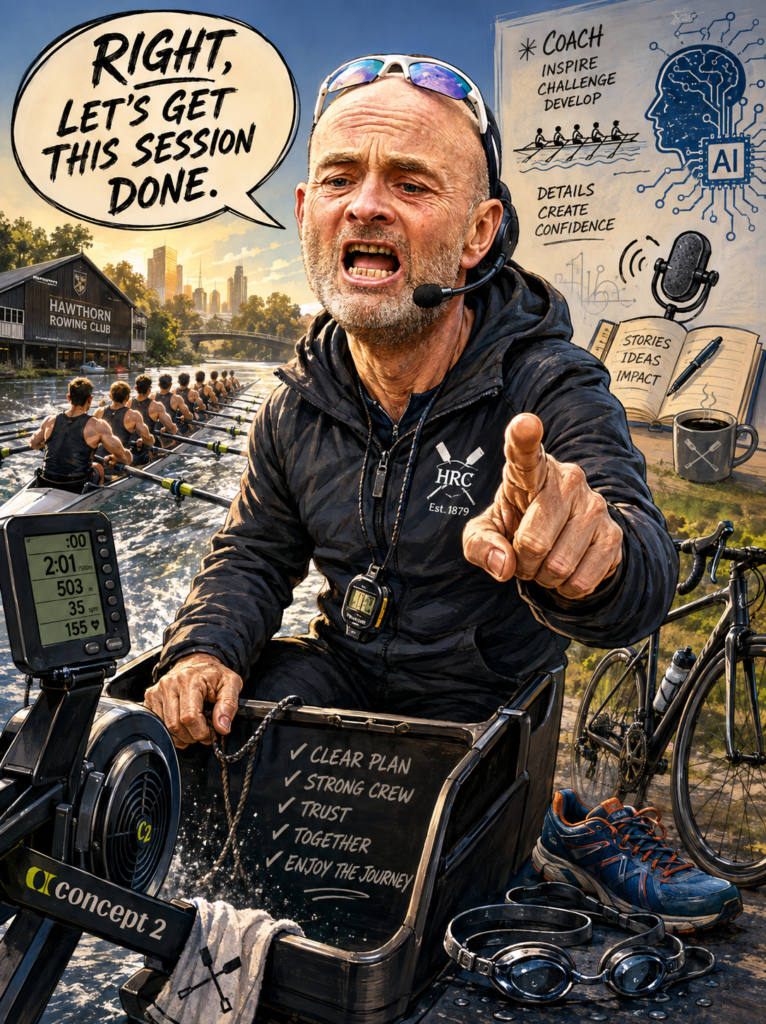
Back in 2023, I used AI to help build my triathlon training program for the World Triathlon Championships in Pontevedra, Spain. At the time, things were much more basic than they are now. I would give AI a prompt, get an answer, work through that part of the program, and then move on to the next question. It was useful, but it was still very much a conversation between an AI model and me.
Fast forward a few years and things have changed dramatically. I have now built numerous AI-powered tools and agents specifically to assist with rowing and training programs. Some of the systems I have built are relatively simple, while others are considerably more sophisticated, using large prompts, multiple variables and extensive background information to produce a particular outcome.
That experience has completely changed the way I think about AI and training, because the biggest misconception I see is that AI simply does all the work for you. It doesn’t, at least not if you want to get something genuinely useful from it.
The quality of the answer depends on what you give it
One of the things I have learned is that AI is incredibly good at producing an answer. That doesn’t necessarily mean it is producing the right answer.
Ask an AI model to give you a rowing workout for a 50-year-old, and it will happily give you one. It might even be a very good workout. But it doesn’t know your training history, your current fitness, what you have done for the last four weeks, whether you are recovering from a hard session, what your goals are, how much time you have available, or what limitations you might have. The AI can only work with the information you provide.
And this is where I think there is a huge misunderstanding about using AI for training. If your interaction with AI consists of typing one, two or three sentences and accepting whatever comes back, you are only scratching the surface of what the technology can do. You might get a perfectly reasonable answer, but you aren’t really taking advantage of the ability to give the AI the context it needs to make a genuinely personalised decision. In many cases, you may as well have Googled the question.
The real power comes when you start giving the AI context, rules, variables, knowledge and a clear objective. The more information you can give it about the athlete and the problem you are trying to solve, the more useful the resulting answer can potentially become.
There is another important part of this that is often overlooked, though. You have to tell it the truth.
Be brutally honest with the AI
This sounds obvious, but it is probably one of the most important points I can make about using AI for training. The information you put into the system has to be accurate.
I have known athletes who have over-embellished their level of training, their fitness, their abilities, or what they believe they are capable of. Fitness is probably the biggest one. Someone might describe themselves as an advanced athlete because they have been training for several years, even though their current training volume and performance would suggest otherwise.
And, if I’m being completely honest, I have done it myself.
Sometimes we don’t even realise we are doing it. We tell ourselves what we want to be capable of rather than what we are actually capable of. We remember the good sessions and conveniently forget the bad ones, or perhaps we judge our current fitness on what we could do six months ago.
But AI doesn’t know the difference.
If you tell an AI system that you are an experienced rower who regularly rows 10 kilometres at a certain pace, it will build its response around that information. It has no way of knowing that the last time you actually rowed 10 kilometres was three years ago. The same applies to fitness. If you tell the AI that you can comfortably run 10 kilometres when your current comfortable distance is actually 5 kilometres, don’t be surprised when it gives you a 10-kilometre training session.
The AI hasn’t necessarily made a mistake. We gave it the wrong information.
This is why I believe you have to be brutally honest when giving AI information about your training. You have to be honest with the AI, but perhaps more importantly, you have to be honest with yourself. If the information going in is wrong, the sophistication of the AI doesn’t matter.
Garbage in, garbage out still applies.
AI doesn’t magically know how to coach
When I build one of my training tools, I don’t simply tell an AI model, “You are a rowing coach. Write a training session.” The prompts behind some of my training tools are now six to ten pages long. They contain dozens of variables and a considerable amount of information about how the system should approach training.
Depending on the particular tool, those variables can include age, experience, fitness level, training phase, training objective, session duration, intensity and a whole range of other factors. There are rules about how those variables should interact, how a session should be structured, how progression should work and how the resulting session should be presented to the athlete.
Those prompts have not appeared overnight. They have taken months of testing, changing, refining and fine-tuning. They contain a combination of my own knowledge and experience of rowing and training, together with the ability of an AI model to process that information and apply it consistently.
That distinction is important. The AI isn’t replacing the coaching knowledge. I am putting the coaching knowledge into the system and then asking the AI to use it.
Think of it as a very clever coaching assistant
This is probably the way I would describe AI when it comes to training: a very clever assistant. It can process an enormous amount of information very quickly and take a set of instructions and variables and turn them into a training session. It can modify that session if circumstances change, explain why the session has been constructed in a particular way, or create another version for a different athlete. It can do many of the things that take a coach considerable time, particularly when that coach is working with a number of athletes.
And this is where I think coaches should be paying attention.
I don’t see AI replacing the coach. Quite the opposite. I think the coaches who are prepared to embrace this technology could potentially become better coaches because of it.
There is a perception that the main job of a coach is to write training programs. It isn’t. Writing a training program is important, but let’s be honest, it isn’t particularly difficult. There are books, websites, apps, and now AI systems that can all produce a training program. Given enough information, almost anyone can put together a series of sessions.
The real skill of coaching is what happens around the program.
Coaching is as much psychology as it is science. It is understanding the athlete in front of you. It is knowing when to push and when to back off, understanding why someone isn’t performing even when the numbers suggest they should be, and recognising when an athlete needs a challenge, when they need reassurance, and sometimes when they simply need someone to listen.
It is building trust and understanding the person, not just the athlete. No AI can replace that relationship.
What AI can do, however, is potentially give that coach more time to do it. Imagine a coach who spends hours every week writing individual sessions, modifying programs, answering the same basic questions, and producing training notes. If AI can take some of that workload away, those hours don’t have to disappear. They can be put back into coaching.
That could mean more time talking to athletes, more time watching them train, more time understanding what is happening in their lives and more time analysing the things that really matter. That is where I think AI could be a genuine game changer for coaching. It isn’t about replacing the coach; it is about giving the coach more time to actually coach.
What’s the difference between an AI bot and an AI agent?
Most people have now interacted with an AI chatbot. You type something into a box, it answers, you ask another question and it answers again. That is the basic model most people are familiar with.
But there is a difference between a simple AI bot and what is increasingly being called an AI agent. The terminology can get a little confusing, and there isn’t always a universally agreed definition, but essentially an agent can be given a much more defined role. It can be provided with extensive background knowledge, specific instructions, access to other information, and, depending on how it has been built, the ability to use other tools or perform tasks.
This is something I have been experimenting with extensively.
For The Coxswain’s Journey, I have built AI agents that are designed specifically to help with rowing and training questions. The interesting part isn’t simply that the agent can answer a question. It is what information it has been given before it answers.
My agent has access to my podcasts and articles. It knows about my rowing experience and my training philosophies. It has been given the full transcript of my book, Beyond The Call: The Art of Being A Rowing Coxswain: The Complete Guide. It has also been given specific instructions about how it should use that information and how it should respond.
So, if someone asks a question about rowing, it isn’t simply searching the internet and giving the first plausible answer it finds. It has a foundation of knowledge and a particular coaching philosophy to work from. Where appropriate, it can also access current information from the internet.
That is a very different proposition from simply asking a general-purpose chatbot, “What’s a good rowing workout?”
So where do LLMs fit into all this?
This is where some of the terminology can become confusing. You will often hear people talk about LLMs, or Large Language Models. In simple terms, an LLM is the underlying AI model that processes language and generates responses.
ChatGPT uses LLMs. Claude uses LLMs. There are a number of other companies producing their own models as well. I tend to think of the LLM as the engine. What you build around that engine – the instructions, knowledge, variables, tools and systems – determines what you can actually do with it.
This is why I can use different AI models for different jobs. For some of my training programs, I use Anthropic’s Claude. For some of my AI agents, I use ChatGPT. I can also choose different levels of models depending on what I need from them.
Sometimes speed is important. Sometimes I need a deeper level of reasoning. Sometimes a simpler model is perfectly adequate. And, of course, cost also plays a part. There is no point using the most powerful and expensive model available to perform a simple task that a faster, cheaper model can handle perfectly well.
That is another part of building AI systems that most people never see.
The prompt is much more than a question
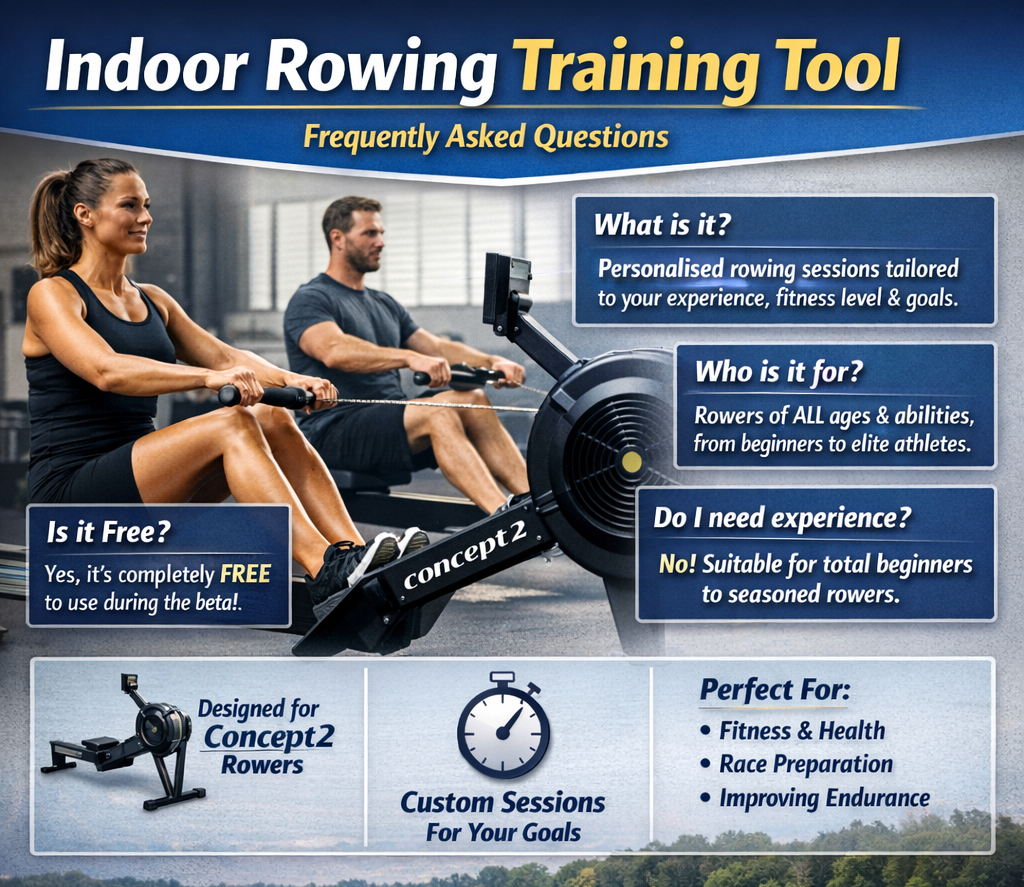
There is a tendency to think of a prompt as simply asking a question: “Write me a training program.”
But when you start building proper AI tools, the prompt becomes much more than that. It becomes the instruction manual. It tells the AI what role it has, what information to consider, what rules to follow, what not to do, how to interpret the variables, how different pieces of information should interact, and how the final result should be presented.
It can also tell the AI when it should not provide a particular recommendation.
That is why my training prompts have become so long. The length itself isn’t the objective. There is no magic number of pages that suddenly makes an AI prompt good. The objective is to give the AI enough information and enough structure to produce a useful and appropriate result.
A three-sentence prompt can be perfectly adequate for some tasks. If I want to know how many potatoes I need for dinner, I don’t need to write six pages of instructions to an AI. But if I am trying to build a genuinely personalised training system, three sentences aren’t going to contain everything the system needs to know.
The biggest problem with AI?
There is one thing about AI that still concerns me: it is very good at sounding confident.
That can be dangerous, particularly when we are talking about training. AI can give you a beautifully written training program that looks incredibly professional. It can explain exactly why you should do it and give you physiological reasons for doing it, and it can still be wrong.
That is why I don’t think athletes should blindly follow AI-generated training any more than they should blindly follow a training program they found on the internet. The athlete still needs some knowledge. They need to understand what they are doing and, importantly, they need to recognise when something doesn’t look right.
This brings us back to one of the most important points in this whole discussion: AI is only as good as the information and instructions it is working with.
If you tell it the wrong thing, it will quite happily build the wrong thing, and it probably won’t apologise until you point it out.
So, is AI a new way to train?
I think it is, although perhaps not quite in the way some people imagine.
I don’t see athletes handing over complete responsibility for their training to a chatbot, and I certainly don’t see AI replacing good coaches. What I do see is the possibility of creating a much more personalised and responsive training environment.
An athlete could have access to a training assistant that understands their goals, their history, their training structure and their individual circumstances. A coach could have an assistant that helps build sessions, analyse information, adapt programs and answer routine questions. A rowing club could potentially give its members access to a knowledge base containing the club’s own coaching information and resources.
For coaches in particular, I think this is an opportunity rather than a threat. The coaches who embrace the technology won’t necessarily be replaced by it. They may simply find that they can spend less time doing the repetitive parts of their job and more time doing the things that make them a good coach in the first place.
If AI can write the first draft of a training session in seconds, why would a coach spend an hour doing it? The coach can review it, change it, improve it and, most importantly, decide whether it is actually right for the athlete.
The same applies to communication. If an AI system can answer routine questions about training zones, session structures or terminology, that doesn’t mean the coach becomes less important. It means the coach has more time available when an athlete comes to them with the question that really needs a coach.
And those are often the questions that have nothing to do with training zones.
But there is a catch
The better the result you want from AI, the more thought you need to put into what you are asking it to do. That means giving it good information, being honest about your fitness and abilities, providing enough context, understanding the principles behind the training you are asking it to create, and checking the result rather than simply accepting it because it happens to look professional.
The AI provides the processing power, but the human still provides the knowledge, experience, judgement and direction. Give AI a vague question, and you will probably get a generic training program. Give it detailed information, properly constructed instructions, relevant variables, good training principles and a clear objective, and you can get something remarkably sophisticated.
But there is one final ingredient that no amount of AI can provide.
You still have to do the training.
AI can design the erg session, explain why you are doing it, adjust it when you only have 30 minutes, and, if you really want it to, create the playlist to go with it. But it can’t sit on the erg for you. It can’t make you get on the machine when you don’t feel like training, hold your technique together when you are exhausted, or make the last 500 metres hurt any less.
Unfortunately, I’ve tried that bit, and AI hasn’t figured it out yet.
AI isn’t the coach. But it could be a very good training partner.
I have become a firm believer in the potential of AI for training. Not because I think it is perfect, and certainly not because I think it will replace coaches. I believe in it because I have spent a considerable amount of time actually building and using these systems. I’ve tested them, broken them, changed them, asked them the wrong questions, given them too much information, not enough information, and generally experimented until I got a better understanding of what they can and can’t do.
And the more I work with AI, the more convinced I become that the real opportunity isn’t asking AI to do the thinking for us. It is using AI to help us think better.
For athletes, that could mean having a training partner available whenever they need one. For coaches, it could mean having an assistant that takes care of some of the time-consuming work that gets in the way of actually coaching.
But there is a learning curve. If you want to get the best out of AI, you need to learn how to use it. You need to understand what information to give it, how to structure your instructions, how to provide context and, perhaps most importantly, how to question the answers it gives you.
You also need to be honest. Really honest. Because if you tell the AI that you’re fitter, stronger, faster or more experienced than you really are, it will happily believe you. And then it will build your training around the athlete you told it about, rather than the athlete you actually are.
Used badly, AI will give you another generic training program. Used properly, with the right knowledge behind it and the right information going into it, I think it could become one of the most powerful training tools available to us.
And perhaps that is the real opportunity. Not replacing the coach, not replacing the athlete, and certainly not replacing the hard work. Just using a very clever piece of technology to help both coach and athlete spend more time concentrating on the things that really matter.
So, is AI a new way to train?
I think it is.
But the technology isn’t the clever bit. Knowing how to use it is.
If you have any questions or comments about AI training, I’d love you to reach out. guy@thecoxswainsjourney.com
And finally, why not check out some of my training tools:
Rowing Trainng Session Builder
Rowing Program Training Builder
Guy Besley is the author of Beyond the Call: The Art of Being a Rowing Coxswain. If you'd like to learn more, it's available as a two-volume edition on Amazon.

0 Comments