Before You Make the Boat Faster, You Need to Make Yourself Faster
Let’s be honest. If you asked most rowers whether they’d rather spend an hour on the water or thirty minutes on an erg, they’d choose the water every single time. That’s why we fell in love with rowing in the first place. There is something special about watching the sun rise, or the sun set, over a quiet river, feeling the boat run beneath you and hearing eight athletes moving together in perfect rhythm. Nothing will ever replace that feeling, and nor should it.
But if I asked you a different question — not about what you enjoy most, but about what will make you a better athlete — your answer might be different.
If your main training goal was to become fitter, stronger and ultimately make your crew faster, where would you get the biggest return on your training investment?
For many athletes, the answer isn’t on the water at all.
It’s sitting quietly in the corner of the shed, the back of your garage at home, or a crowded gym.
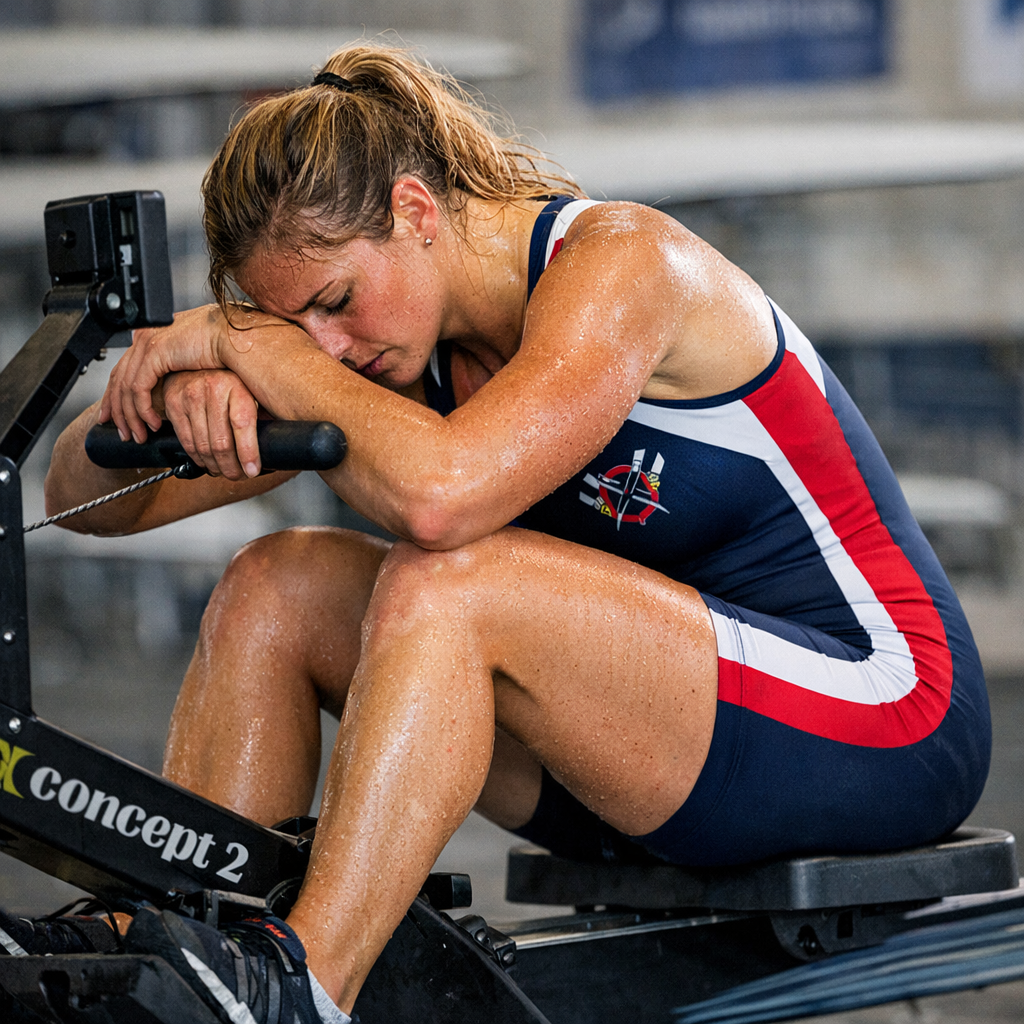
The erg has never had the romance, and definitely not the fun of rowing. No one puts a photo of themselves smiling on an erg on social media. It’s hard, repetitive, and, if we’re being honest, it can be mentally draining and stressful. Yet I would argue that few pieces of equipment have done more to improve rowing performance than the “terrifying” rowing machine.
Think about an average water session. You drive to the club, get changed, carry boats, wait for people to arrive, rig equipment, launch, stop to regroup, row, return to the shed, wash the boats and pack everything away. Before you know it, two or three hours have disappeared, including a lot of wasted time; well with the exception of maybe the post-row beer, of course (that’s a shout-out to my rowing mate, John Perry).
Now compare that with a quality erg session.
Within a few minutes you’re warming up. Thirty or forty minutes later you’ve completed a workout that has challenged your heart, lungs, brain and muscles from the first stroke to the last. Every minute has been productive. There has been no waiting, no interruptions and no wasted time. From a purely physiological point of view, it’s hard to think of another training session that offers such a high return on investment.
That’s not to say the erg replaces rowing. It never will. Rowing is a technical sport, and nothing develops boat feel, timing and crew rhythm like time on the water. But fitness and technique are two different things. Make no mistake, the fitter you become, the more effectively you can apply your technique, and that’s where the erg really comes into its own.
One of the biggest reasons is its ability to improve your aerobic capacity. If I had to choose one type of training that delivers the greatest improvement in fitness for most rowers, it would be structured erg intervals. They are demanding, uncomfortable, and certainly not everyone’s favourite session, but they work. Interval training allows you to spend time working close to your maximum aerobic capacity, challenging your cardiovascular system in a way that steady rowing just can’t. Over time your VO₂ max improves, your recovery becomes quicker and your ability to sustain power increases. Quite simply, you build a bigger, stronger engine.
And in rowing, bigger engines win races. Technique wins admiration. Fitness wins races. The best crews have both, but without a big engine it’s incredibly difficult to apply great technique when the pressure comes on.
What I also love about erg training is its honesty.
Out on the water there are countless variables. Wind, current, temperature, the crew you’re rowing with, the boat, the quality of the steering, and even the mood of the crew can influence how fast you go. Sometimes everything comes together, and the boat feels incredible. Other days it feels like you’re rowing through glue.
The erg removes almost all of those excuses.
The monitor doesn’t care if it’s raining outside. It doesn’t care whether you’ve had a stressful day at work or whether you only slept for five hours last night. It simply measures what you produce. Your split, your watts (which, in my opinion, remain one of the most undervalued statistics in rowing), your stroke rate, your heart rate and your distance are all there in black and white. Week after week, those numbers tell a story. If your average split is improving across a training block, you’re getting fitter. If you’re producing more power at the same heart rate, you’re becoming more efficient. The numbers don’t lie, and that’s one of the greatest strengths of erg training. Progress becomes measurable rather than something you simply hope is happening.
Another reason I love the erg is that it removes excuses. The river might be flooded. It might be blowing 40 km/h. It might be dark before you finish work. Your crew might have cancelled training. None of that matters. If you’ve got an erg, you can train. Consistency is one of the biggest predictors of improvement, and the erg makes consistency possible all year round.
There is another side to the erg that often gets overlooked, and that’s the mental side.
An erg session has no scenery to distract you. There is no boat running beneath you and no crew to carry you through a difficult patch. It’s just you, the flywheel and a monitor counting down every painful metre. There comes a point in every hard interval where your body starts negotiating with your mind. Slow down. Ease off. Skip the last repetition. Finish a minute early. We’ve all had those conversations with ourselves.
The athletes who continue pulling are developing something that extends well beyond fitness.
They’re developing resilience and mental toughness.
Every difficult interval becomes practice for race day. Every time you choose to keep going when everything hurts, you’re teaching yourself that discomfort doesn’t have to mean stopping. That’s a lesson you’ll use every time your crew reaches the final stages of a race, and everyone is searching for one more effort.
Perhaps the biggest thing rowers forget is that they’re never training just for themselves.
Every session you complete makes your crew stronger.
Every interval you finish gives your teammates another athlete they can trust and rely on.
When everyone in a crew commits to doing the hard work away from the river, something special starts to happen. Standards rise. Expectations rise. You don’t need to tell people you’ve been training because they can see it. They notice you’re still producing power when others are fading. They notice you’re recovering more quickly between pieces. They notice that you never seem to give up in the closing stages of a race.
Nothing earns respect within a crew quite like quietly doing the work when nobody else is watching.
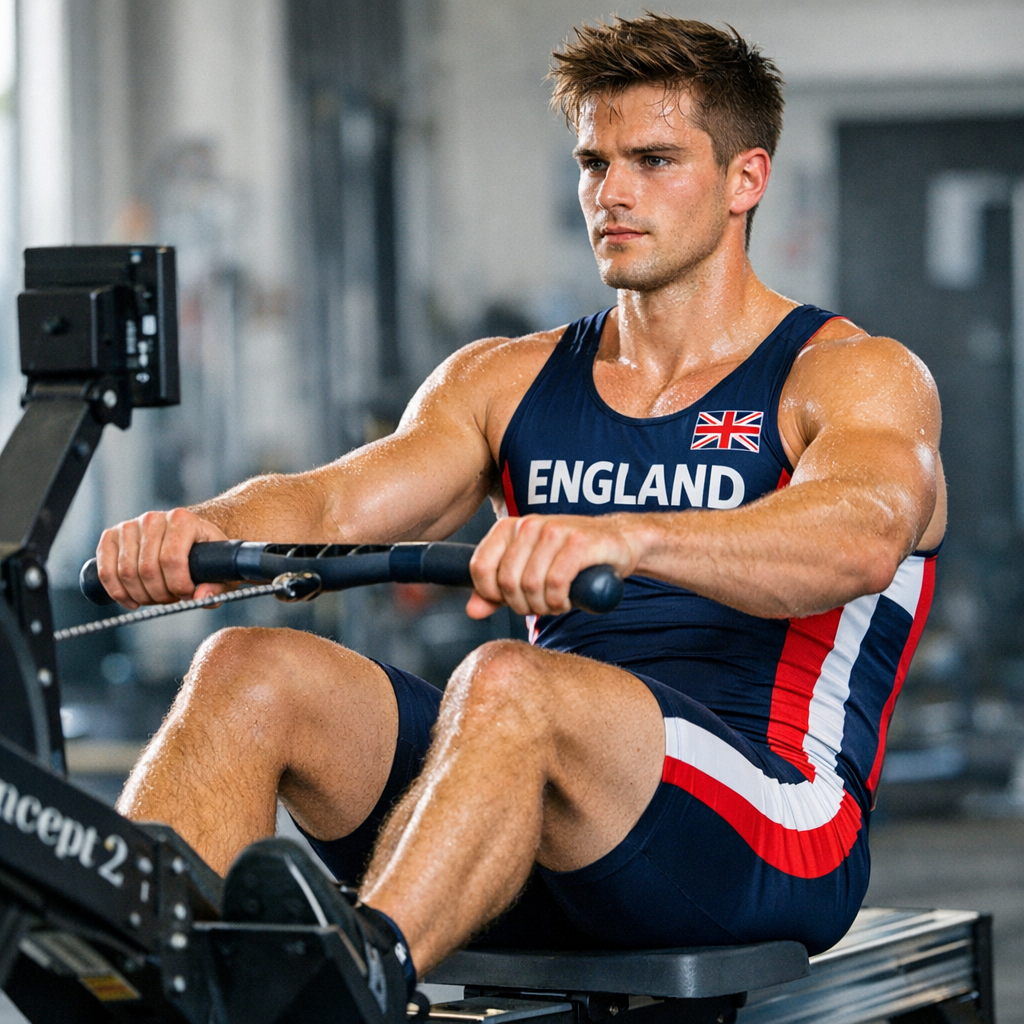
I often think of erg training as making deposits into a bank account. Some deposits are small. Others are enormous. Some sessions feel fantastic, and others leave you questioning why you ever started rowing in the first place. But every quality session adds something to the account. You may not notice it tomorrow or even next week, but over the course of a season those deposits accumulate into a level of fitness, confidence and resilience that you simply can’t fake.
Come race day, you’re not hoping you’ll be fit enough.
You’re simply making a withdrawal.
So the next time you’re staring at an erg and wondering whether today’s session is really worth it, remember what you’re investing in. You’re investing in a bigger engine, a stronger mind, measurable improvement and, most importantly, a faster crew.
The erg may never become your favourite place to train, but if your goal is to become the best rower you can be, it just might be the smartest investment you’ll ever make.
“The river teaches technique. The erg builds the engine.”
If this article has convinced you that erg training deserves a bigger place in your program, I’ve created a free online Erg Coach that generates structured training sessions based on your experience, fitness, and goals. Whether you’re training for your first 1 or 2 km test or preparing for your next regatta, it’ll help you make every session count. Give it a try – CLICK HERE— it’s completely free.
Guy Besley is the author of Beyond the Call: The Art of Being a Rowing Coxswain. If you'd like to learn more, it's available as a two-volume edition on Amazon.


0 Comments